Arabic no-code platform: what should you look for before choosing?
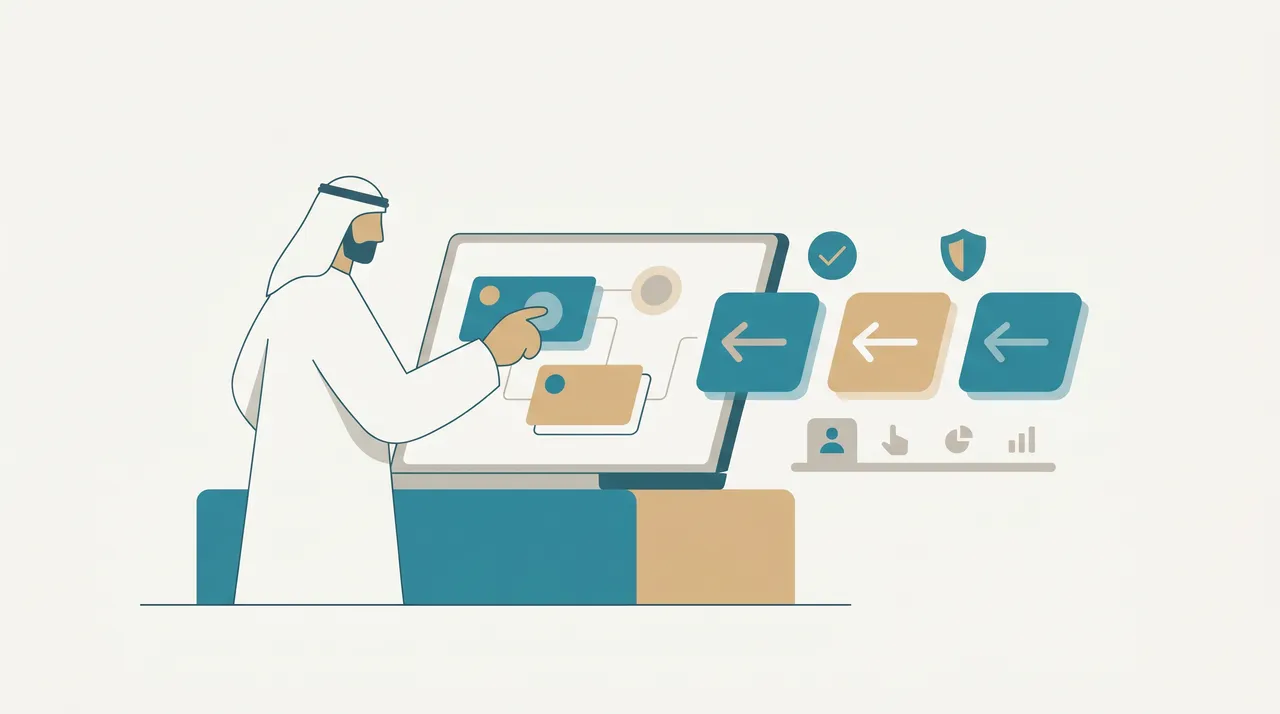
Before you pay a single subscription fee, make sure of three things: full Arabic language support with right-to-left text handling, the ability to export your data whenever you want, and clear pricing in riyals or dirhams with no surprises. Any Arabic no-code platform that stumbles on one of these points will cost you time and money later. I'll explain the rest of the criteria based on practical experience with entrepreneurs in the Gulf who built their applications without writing a single line of code. Take this list with you when comparing, and you'll save yourself weeks of trial and error.
Why do you need a platform designed for Arabic from the start?
The difference between a platform that supports Arabic "later" and one built on it from the beginning is vast. Try it yourself: enter Arabic text mixed with English numbers in a registration form. Foreign platforms often break word order, place the question mark in the wrong spot, and align buttons to the left when the reader expects them on the right.
These are small details that ruin the Arabic user's experience immediately. Your customer in Riyadh or Doha will feel the app is "strange" without knowing why.
A truly Arabic platform handles RTL alignment, Hijri and Gregorian date formatting, Arabic and Hindi numerals, without asking you for programming tricks. Even fonts make a difference; poor Arabic typography makes text tiring to read on mobile, and that's where most of your Gulf customers browse. Test how long Arabic text looks on a phone screen before you decide.
We discussed earlier reasons the Arabic market needs no-code tools now, and the bottom line is that Arabic content is no longer a luxury but a condition for acceptance by the local user. Don't compromise on this point no matter how tempting the other features are. Any Arabic no-code platform that claims to support our language must prove it practically in the trial, not just on the marketing page.
How easy is it to use for non-technical people?
You should be able to build your first screen within an hour without opening a help file. This is the practical standard for ease of use. If you need to watch a twenty-minute video before adding a single button, the platform isn't really "no-code" for you.
Look for a clear drag-and-drop interface and ready-made templates you modify instead of building from scratch. Templates save weeks.
Test the platform with a small task before committing: create an appointment booking form with two fields and a send button. Watch how many steps it takes. A good platform will complete it in fewer than ten clicks. If you find yourself searching Google for how to add an email field, that's a clear sign of unnecessary complexity.
Watch out for a common trap: some platforms look simple in the sales pitch, but they quickly push you toward writing complex formulas at the first real feature. Try the free version and build something resembling your actual project, not just a surface test. Browse the template marketplace to get an idea of your starting point and how close the templates are to your idea. The best Arabic no-code platform is one that makes you forget you're "coding" at all, and focus on your idea alone.
Does it rely on artificial intelligence in building?
Yes, and that changes the equation. Modern platforms let you describe your idea in Arabic and the artificial intelligence takes over creating the app's initial structure. Instead of drawing every screen manually, you write: "I want a date store with a cart and checkout page" and you get a draft you can edit. This cuts the start to minutes.
But not all AI-powered tools are equal. Some understand colloquial and classical Arabic both, while others stumble at the simplest request in Gulf dialect.
Ask the tool to generate text for an "about us" page for a restaurant in Jeddah. If the text comes out awkward or translated, that's a sign its language model isn't well trained on Arabic. Another quick test: ask for a product description in simple Saudi dialect, and watch whether it understands local context or gives you stiff Arabic.
We compared the options available in an article AI-powered app building platform. My honest take: artificial intelligence is a great acceleration tool, but don't hand it final decisions. Review every screen it generates with your own eyes before publishing. A good Arabic no-code platform makes AI your assistant, not a replacement for your feel for your project.
How does the platform handle your data and your customers' privacy?
Store your customers' data where local law permits, and don't choose a platform that won't tell you where its servers are located. That's the first rule. In Saudi Arabia, for example, the Data and AI Authority (SDAIA) set controls to protect personal data, and some sectors require data to stay within the kingdom.
Ask the service provider a direct question: can I export all my data in CSV format whenever I want? The answer should be "yes" right away.
A platform that holds your data hostage locks you into a permanent subscription against your will. This is a real nightmare some project owners faced when they had to rebuild everything from scratch after prices jumped suddenly. Imagine losing a customer base you built over two years because the platform won't let you export. That alone is reason enough to reject it.
Review the privacy policy and terms of service before signing, not after. Check for encryption in transit and storage, and the backup system. Good documentation like the app security guide explains these points clearly instead of marketing vagueness. If you don't find a clear security documentation page on the platform, consider that a red flag and look for an alternative.
Can it be integrated with payment gateways and Gulf services?
Make sure it supports the payment gateways your customers actually use, like Mada, Apple Pay, Tabby, and Tamara. An online store that doesn't accept Mada in the Saudi market loses a huge slice of buyers. This isn't a minor detail but the lifeblood of your sales.
Also check integration with local shipping services and e-invoicing systems compliant with the Zakat and Tax Authority (Fatoora).
The ideal platform offers ready-made links (integrations) with these services without coding. Ask for a list of available integrations before subscribing, and verify what you need exists today, not "soon". Future promises don't launch a project or close a sale.
What no one tells you: some platforms announce integration with a payment service, but it requires an expensive enterprise plan. Read the fine print. Try a complete test payment before official launch; discovering payment doesn't work after going live to customers is awkward and costly. A dummy purchase for one riyal reveals a lot and saves you customer complaints on day one. Make this test a fixed part of your routine before any release.
What happens when your project grows?
Choose a platform that grows with you, not one that collapses at the first hundred concurrent users. Growth is the goal, so it doesn't make sense for the tool to be a barrier to it. Ask about plan limits: how many records are allowed? How many users? What happens when you exceed the limit?
Watch the app's speed under pressure. A slow app drives visitors away before they finish the order.
A mature platform provides an analytics dashboard that tracks your project's performance and user behavior, like the project activity dashboard. Without data, you're running your project with your eyes closed. How many users leave at the checkout page? Which product gets the most views? These numbers make smart decisions.
Think about the cost in the long term, not just the first month. A cheap plan today might multiply five times when you reach a thousand users. Calculate your expected growth scenario over a year and compare prices at that point. Practical tip: avoid platforms that price by "server requests"; this metric is hard to predict and will hit you with high bills in successful months especially, when you need the money to scale your project. Choose an Arabic no-code platform with fixed, transparent pricing so you can sleep easy.
What kind of technical support and community is available?
Look for technical support in Arabic with timing that suits your region. When your app breaks on Thursday evening before the weekend, you won't benefit from a support team working in a completely different time zone and responding after two days. Quick response saves sales and reputation.
Evaluate documentation quality. Clear Arabic documentation with practical examples saves you hours of stumbling around.
Browse documentation center before signing up and judge for yourself: are the explanations simplified or filled with complex technical jargon? Good documentation is a sign of a platform that respects non-technical users.
An active community of Arab users is a major advantage. You learn from others' experiences and find solutions to problems you hadn't thought of. Ask a question in the platform's community before subscribing and watch how fast and good the responses are. Community silence is a bad sign. From my experience, platforms with vibrant communities evolve faster because they listen to user feedback and turn it into actual features. Any Arabic no-code platform that listens to its users will beat its competitors by miles.
How do you test the platform before final commitment?
Build a scaled-down version of your real project during the free period, not just a casual trial. This is the decisive test. Set aside a weekend and try to complete your idea's most important feature from start to finish.
This practical test uncovers weaknesses that don't show up in marketing pitches. You'll quickly know whether the tool matches how you think or not.
Record your notes: where did you get stuck? What took longer than expected? Did you need support? Compare two platforms by the same criteria to get an objective decision instead of a passing impression. A simple ten-row spreadsheet is enough to judge clearly.
We discussed in the comparison no-code building versus hiring developers how this path saves thousands of riyals in launch phases. Ready to start? You can create a free account and try everything we discussed yourself in minutes, then make your decision based on real experience not glossy promises. Choosing the right Arabic no-code platform is a decision worth two solid hours of testing before you commit.
Frequently Asked Questions
What's the difference between an Arabic no-code platform and a foreign platform that supports Arabic?
The Arabic platform was built from the ground up for right-to-left writing direction, and handles the Hijri calendar, Arabic numerals, and local payment smoothly. The foreign platform adds Arabic as an afterthought translation, so you get issues with alignment, number formatting, and an uncomfortable user experience for the Gulf customer. The difference shows clearly on the first screen you try.
What does it cost to use an Arabic no-code platform in the Gulf market?
Cost varies between a limited free plan and monthly plans starting from tens of riyals and reaching hundreds depending on your project size and number of users. Watch the pricing method: pricing by number of requests might hit you with high bills when you grow. Calculate your expected cost after a year of use, not just the first month, before you commit.
Can I move my app to another platform later?
That depends on each platform's policy. Choose a tool that lets you export your data as CSV or through an unrestricted API so you keep your freedom. Some platforms lock in your data to ensure you stay subscribed, and that's what you should avoid. Check this item and read the privacy policy before signing, not after, so you don't regret it.
Do I need technical experience to build an app on a no-code platform?
You don't need any coding experience at all. Good platforms rely on drag-and-drop and ready-made templates, and some build the initial structure using AI from a description written in Arabic. The only skill needed is a clear understanding of your project idea and your customers' needs. Try building a simple prototype in the free version to confirm the ease of the path yourself.