Building a website with AI: website or app?
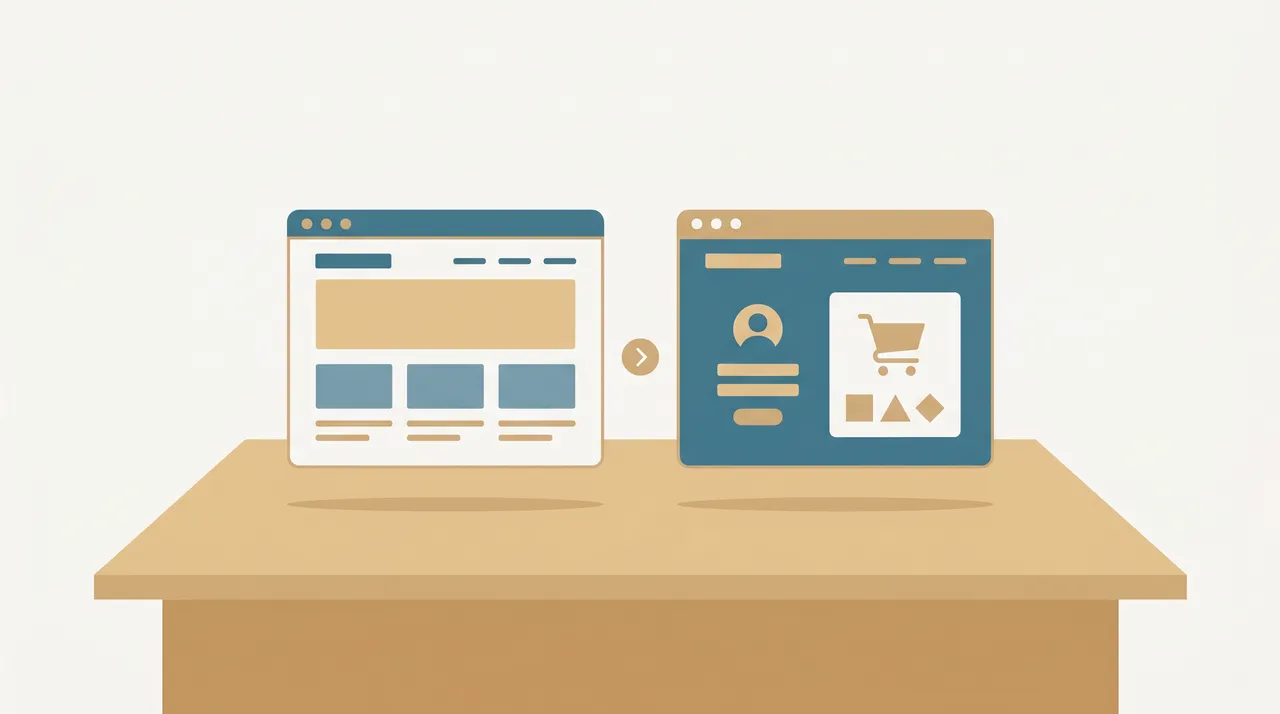
The short answer first: if your goal is for customers to find you on Google and read about you, you need a website. But if you want the user to log in and perform recurring tasks like ordering, booking, or tracking balance, what you need is a web app.Building a website with AIhas become a step any Gulf entrepreneur can accomplish in a single day, but choosing the right type before starting saves you months of wasted work and squandered money. Let's break down the difference in simple language, and let's make your decision today based on understanding, not guessing.
What is the real difference between a website and a web app?
A website is pages that display information: who we are, our services, contact numbers, articles. The reader browses and leaves. A web app is different; it's a program that runs inside the browser, stores user data, and interacts with them in real time.
Take a real example. A restaurant in Riyadh publishes its menu and location on a simple introductory website. But when a customer wants to choose a meal, add it to the cart, and pay via Mada within the same page, it's no longer a website; it's become a web app.
The fundamental difference in one word:Interaction. A website tells. An app does. A website is like an elegant billboard on King Fahd Road. An app is like a receptionist who remembers you, opens your account, and fulfills your request.
This distinction is not a dry technical detail. It determines your budget, launch time, and marketing approach later. Those who confuse them build a product that doesn't serve their customers.
And because AI website-building tools now produce both types, the real question is not "how do I build?" but "what do I build?". The tool executes what you ask faithfully, and if you ask for the wrong thing, you'll get something elegant nobody needs. That's why every successful project starts with this simple distinction.
When is a simple website page enough?
A website is your choice when your primary goal is visibility and credibility, not daily interaction. If the customer reads about you and then calls or visits, the website serves the purpose with the lowest cost and fastest time.
The typical cases are clear:
- A dental clinic in Jeddah wants to display its services and working hours.
- A lawyer in Kuwait builds professional presence and collects inquiries through a form.
- A specialty cafe in Dammam publishes its story and photos to attract new visitors.
- A personal blog or portfolio for a freelance designer.
What many don't realize: the simple website might be smarter commercially than the app at the start. Why? Because Google loves text content. A good article page brings you free visitors for years, while an app isn't indexed the same way.
Honest advice from experience: don't build an app because your competitor did. Many startups in the Gulf wasted their budgets on a complex app when a website with a WhatsApp button would have sufficed. Start with the lighter option, and develop when customers actually request it.
Another advantage of the introductory website: speed to launch. When you rely on AI to build a website for an introductory page, you could be ready to publish within hours, not weeks. And that means you test the market quickly and measure whether there's real demand before you invest in more complex features.
When does a web app become a necessity, not a luxury?
You need a web app when your business model depends on users logging in, storing data, or performing repeated operations. Simply put: if the final outcome is a personal account or a purchase or a dashboard, an introductory website won't cut it no matter how much you polish it.
Clear signs that reveal the need:
- The user needsto log into see content private to them.
- There are payments, or bookings, or monthly subscriptions.
- You store data that changes constantly: orders, messages, appointments.
- You want an admin dashboard where you see statistics and manage content.
Imagine a court rental platform in Abu Dhabi. The owner adds available times, the player books and pays, and the system automatically prevents double booking. This is impossible with a static page. It's a web app pure and simple.
Another example I see often in the Gulf: a subscription platform for a gym. The member renews their package, tracks their classes, and books a spot in the workout. All this is constant interaction with changing data. No static page can do it.
The good news is that building this type is no longer the exclusive domain of software companies. You can nowbuild an app in Arabic with AI in minutesby describing your idea in plain language. What used to take three months from a development team is now possible in a single session.
How is AI changing the way we build?
AI has transformed building websites and apps from writing complex code to having a conversation in simple Arabic. You describe what you want, and the tool generates the interface, connects the database, and prepares payment pages. The result: someone who doesn't know a single line of code launches a real product.
The difference is tangible. Just a few years ago, an entrepreneur would collect price quotes starting from tens of thousands of riyals and wait weeks to see the first version. Today you write: "I want a honey shop with a product page, cart, and payment", and a customizable interface appears in minutes.
This doesn't mean everything is magical. You still need to understand what you want clearly. The tool executes your vision, but it doesn't invent it for you. The more precise your description, the closer the result to what you imagined.
A practical tip: write your request as if you're explaining to a new employee. Don't say "I want a beautiful website". Say "I want a homepage with a product list, a buy button, and a contact form". Specificity is what distinguishes a satisfactory result from building a website with AI from one that needs hours of fixing.
If you want a practical comparison between running this task in-house versus hiring a team, the articlebuilding an app with AI versus hiring developersbreaks down the numbers honestly. My takeaway is clear: for your first project, start with AI and hire a developer later when you scale.
What does each option cost in the Gulf market?
The introductory website built through AI tools might cost you a simple monthly subscription not exceeding one to two hundred riyals, plus a domain name. A complete web app with payment and account features stays a bit higher, but is much cheaper than traditional development.
Let's put realistic numbers. Hiring a programming company in the Gulf for a medium booking app might start at 40,000 riyals and exceed 150,000 depending on complexity. AI website-building tools reduce this to a fraction, while keeping full ownership in your hands.
But the cost doesn't end at launch. Always calculate:
- Monthly hosting and domain renewal.
- Payment gateway fees (Mada, Apple Pay) which are a percentage of each transaction.
- Maintenance and updates time.
A common mistake I've seen repeatedly: the entrepreneur focuses on the initial build cost and forgets operating costs. A cheap app to build might be expensive to maintain. Ask about the full annual cost before you commit to any platform.
And there's an even sneakier hidden cost: your time. Every week you wait for an outside developer is a week with no customers. When you build yourself through a smart tool, you close that gap and start earning sooner. That alone justifies the monthly subscription for many startups.
Can you need both at once?
Yes, and this is the optimal scenario for many mature businesses. You build an informational website that attracts visitors from Google and convinces them, then you connect it to a web app that executes transactions. The website brings them in, the app serves them. Each does what it does best.
Think of a successful Gulf e-commerce store. The homepage, articles, and product descriptions are all website content that makes you appear when someone searches for "best wholesale dates in Saudi Arabia". But the shopping cart, account, and shipment tracking are app functions.
When combining them, start with what serves your customer first, not what impresses your competitor. Ask yourself: does my customer search for me first, or do they interact with me daily? The answer determines what you build first and what you defer.
The reassuring part is that modern platforms combine both under one roof. You don't need two separate tools or two teams. You can manage your informational pages and app functions from one place, and trackactivity of your projectsin a clear dashboard that shows you who visited and who actually engaged.
Notice a practical sequence here. Start with the website to appear and convince, then add the app layer when customers repeatedly ask "How do I book?" or "How do I pay online?". You build based on real demand, not on your imagination of what people might need someday.
How do you choose the right platform for your project?
Choose the platform based on three criteria: its genuine support for Arabic and right-to-left direction, ease of adding local payment methods, and your complete ownership of your data. Any platform that fails on one of these three will cost you time and frustration later.
Arabic support is not a luxury in the Gulf market; it's essential. Many foreign tools break the design when you write in Arabic, so text appears reversed and buttons end up in the wrong places. Test the platform with real Arabic content before subscribing, not with test English text.
Also review these points before deciding:
- Does it provide ready-made templates that save you time? Browsethe template marketplaceto see practical examples.
- What is the level of security and protection of customer data?
- Can you export your work or migrate easily later?
A quick test I recommend: write one Arabic order and see the result. If the page appears with correct direction, readable Arabic font, and buttons in their right places, the platform understands your market. But if it stumbles on the first sentence, save yourself the hassle of relying on it later in a project to build a website with complete artificial intelligence.
For a broader comparison between available options, an article onAI app-building platform: which one do you choose?will help you decide without regret.
What are the practical steps to start today?
Start by defining the single outcome you want the visitor to achieve, then choose the type based on it, then write a simple description of your idea and launch a small first version. Don't wait for perfection. The version that works today is better than the perfect plan you never execute.
Concrete steps I recommend:
- Write one sentence describing your project: "a website showcasing my services" or "an app that receives bookings".
- Reserve a domain name that reflects your business name in Arabic or English.
- Prepare your texts and images beforehand; this cuts the time in half.
- Create your account and start with a template close to your idea.
What nobody tells you: your first version won't be your last, and that's normal. Launch, gather feedback from your real customers, then adjust. Projects that succeed aren't the most complete ones, but the fastest at learning from their users.
A common beginner mistake: spending days choosing colors before publishing anything. Color can be changed in a minute. Your product's absence from the market costs you customers. Publish then beautify. AI website-building experience is designed for this fast pace in the first place, so take advantage of it and don't slow it down with perfectionism.
Ready to start? You canstart for freetoday and test the idea yourself before you commit to anything.
Frequently asked questions
Do I need programming experience to build a website with artificial intelligence?
You don't need any programming experience. Modern platforms rely on you describing your idea in regular Arabic language, then they automatically handle design generation, database connection, and payment pages. Your role is to know what you want clearly, review the result, and adjust it. Thousands of non-technical business owners in the Gulf launch their products this way without writing a single line of code.
How long does it take to build a website or app with artificial intelligence?
A simple informational website might be ready in hours if your texts and images are prepared. A web app with payment and account features might take a day or a few days depending on complexity. The key is preparing your content beforehand; most wasted time goes into finding images and texts, not the building itself.
Will my AI-built website appear in Google search results?
Yes, if it's a website with clear text content and indexed pages. Informational websites and blogs appear well in Google because they rely on text. But web apps closed behind login don't get indexed the same way, which is why many combine a website for visibility with an app for service.
Is my data and my customers' data secure on these platforms?
Security depends on which platform you choose. Look for encryption support, regular backups, and clear data protection policies. Review the security page in the documentation and make sure you have complete ownership of your data and can export it. Serious platforms targeting the Arab market commit to protection standards that match business requirements in the Gulf.