Arabic no-code: why does the market need it now?
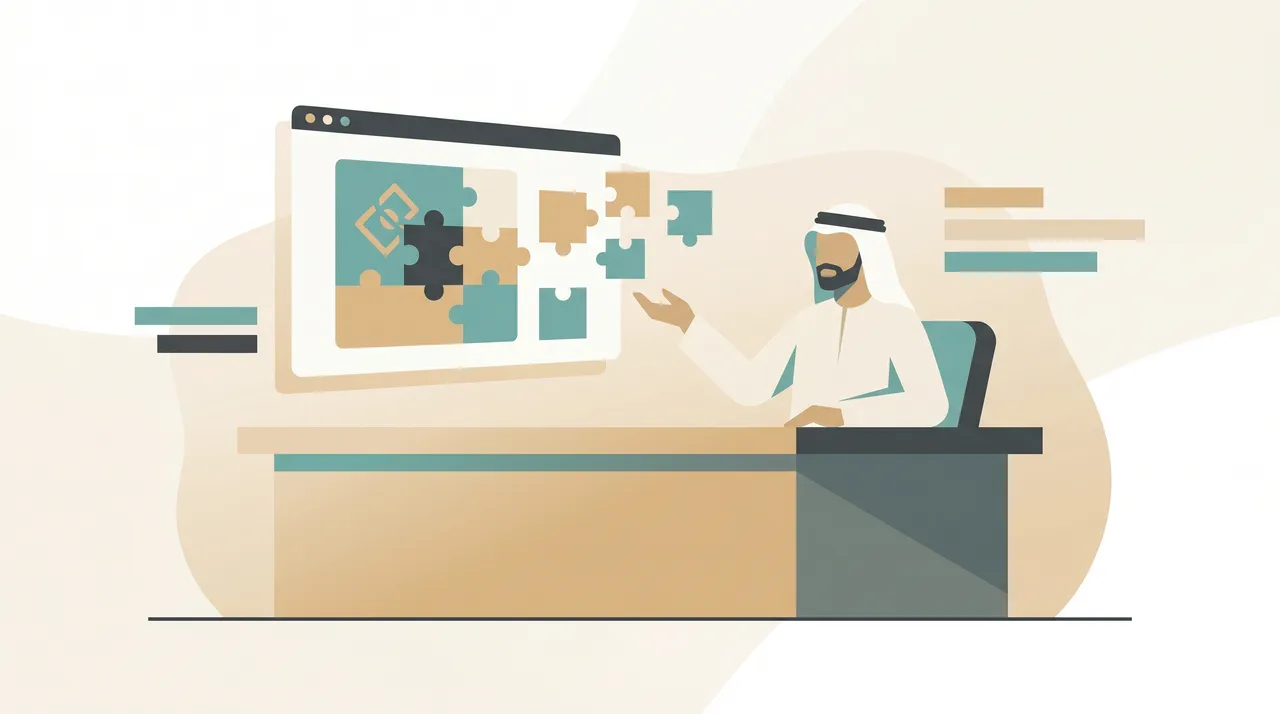
The short answer: because thousands of entrepreneurs in the Gulf have ready ideas, but they're stuck waiting for a programmer or a budget they don't have. Arabic no-code solutions break this barrier completely. You write your idea in Arabic, and the text transforms into a working app in minutes. Building a digital product is no longer a luxury reserved for large corporations alone.
Let me be straight with you. The Arab market lagged for years in no-code building tools. Now it's catching up fast.
What's driving demand for Arabic no-code today?
Demand for Arabic no-code is rising because the gap between idea and execution has become very expensive. A single developer in Riyadh or Dubai might ask for a monthly salary that exceeds an entire startup's budget. And waiting kills ideas before they're born.
There's another factor driving this demand: the growth of young entrepreneurship. Support funds like "Monshaat" in Saudi Arabia and incubators in the UAE and Kuwait are pouring in huge funding, but project owners are often not technical. They're restaurant experts, retail traders, or logistics service providers.
Imagine a cafe owner in Jeddah wanting a simple loyalty app for his customers. The traditional way, he needs a quote, a contract, and three months of waiting. With an Arabic no-code tool, he describes what he wants and sees the result in one session.
The language itself was the biggest obstacle. Most global no-code platforms work in English, and their interfaces don't support right-to-left writing well. This means non-fluent English speakers find themselves out of the game. A tool that understands Arabic and builds proper Arabic interfaces opens the door to a huge segment that was left out.
How does codeyy close the Arab market gap?
codeyy closes the gap through a platform that takes your idea description in Modern Standard Arabic or dialect, then builds a complete app with artificial intelligence. No rigid templates and no need for programming experience. The interface is fully Arabic, and the resulting app supports the Arabic language and text direction naturally.
The fundamental difference here isn't just translating an interface. The difference is that the platform thinks in Arabic. When you write "I want a date shop with cash on delivery payment option," the tool understands the local context and builds on it.
Try browsing explanation of what codeyy is to see how the platform handles complex ideas and transforms them into clear building steps. It's more like a conversation with a patient engineer who understands your dialect.
What really sets codeyy apart is the editing cycle. You don't build the app once and stop. You request a change, watch it happen instantly, then keep improving until the product is exactly as you imagine it.
And that's exactly what the Gulf market needs: speed, flexibility, and a tool that doesn't ask you to learn complex technical terms before you launch.
Who benefits first from no-code building?
The first beneficiary is the non-technical entrepreneur with a clear idea and a limited budget. This includes small shop owners, service providers, and employees who want to test a side project without leaving their jobs or draining their savings on a development team.
Let me be specific with examples. A beauty clinic owner in Doha wants an Arabic appointment booking system. A teacher wants a private lessons platform for his students. A startup delivery company in Manama needs a simple driver dashboard.
All of these people previously paid huge amounts or gave up on the idea. Now they can build it themselves.
There's another beneficiary you might not think of: small technical teams themselves. The busy developer uses no-code tools to build a quick prototype to show investors, instead of wasting two weeks on an interface that might change tomorrow.
Creative agencies too. A UI designer builds an interactive demo for the client in one day. This shortens the approval cycle and reduces conflicts. The advice I always repeat: don't wait until you master programming, start with your idea and turn it into a tangible product that people can use and give feedback on.
Is no-code building really faster than hiring?
Yes, by a big margin. Hiring a developer or contracting with an agency takes weeks of searching and interviews and negotiation, then months of execution. With an Arabic no-code platform, you can move from idea to a working, testable prototype in one day, sometimes in an hour.
Speed isn't just a luxury. In the competitive Gulf market, whoever arrives first wins customers. A three-month delay might mean a competitor got to your idea first.
But let me warn you of a common mistake. Speed doesn't mean recklessness. Build a simple version first, test it with real customers, then scale it. This is called the minimum viable product, and no-code building platforms are designed for exactly that.
What many don't tell you: the biggest saving isn't in money but in learning cost. When you build yourself, you understand your product inside out. You know why each feature works and how customers interact with it.
This knowledge is pure gold when you talk to investors or plan expansion. Check out guide to building your first app to see how smooth the first steps have become.
What challenges does full Arabic support solve?
Full Arabic support solves three critical problems: the difficulty of English interfaces for non-fluent speakers, page design breaking when writing right-to-left, and missing understanding of local context like payment methods, currencies, and business habits.
Take the direction issue as an example. Many global tools display Arabic text broken, so numbers appear in the wrong place and buttons on the opposite side. This ruins user experience completely and makes the app look unprofessional.
A tool built for Arabic from the start handles these details automatically. You don't need painful manual edits after every change.
Local context is also critical. A Gulf customer expects cash on delivery, and maybe Mada or KNET. They expect prices in riyals or dirhams, and a calendar that respects local holidays.
A tool that understands this context saves you hours of explanation and correction. And this directly connects to customer trust. An app that speaks their language fluently, in familiar terms, makes them feel it was designed for them personally. This trust is what turns a visitor into a buyer, and a buyer into a loyal customer. The difference between a "translated app" and a "genuinely Arabic app" is the difference between survival and failure.
How do you start your project step by step?
Start by writing your idea in two clear sentences, then open the platform and describe what you want in your natural language. Watch the live preview, request edits, and repeat until you're happy with the result, then publish the app on your own domain.
The most important step is describing the idea with enough precision. Don't just say "I want a shop." Say "a shop for selling mountain honey, with a products page, shopping cart, cash on delivery, and Arabic interface." The more specific your description, the closer the result to your vision.
Guide on how to describe your idea explains this stage with practical detail worth reading before you start.
After the initial build, don't stop at first impression. Use the preview to test every button and every page like you're a real customer. Click here, try buying there, and look for any flow problems.
Then comes the publishing stage. Linking a domain to your brand name gives your project instant credibility. "mystore.com" is far more professional than a long subdomain link.
Finally, don't treat publishing as the end goal. Launch an early version, gather feedback from early users, and iterate based on it. The best products are built through iteration, not perfection on the first try. Start small and grow gradually.
What is changing in the Gulf market by 2026?
The Gulf market is moving toward complete digitalization driven by strong government support. Saudi Vision 2030 and the UAE's digital initiatives are encouraging small businesses to undergo digital transformation. This creates massive demand for fast and affordable Arabic-based building tools.
E-commerce and digital services have become a necessity for survival, not an optional add-on. A merchant without a digital presence loses customers to competitors who have one.
But the barrier remained: cost and complexity. This is where the value of Arabic no-code platforms emerges as the missing link between digital ambition and the actual ability to execute.
I notice a clear shift in how young entrepreneurs behave. They no longer ask "How do I find a programmer?" but "How do I build this myself today?". This mental shift is what matters most.
The new generation isn't afraid of technology. It wants tools that speak their language and respect their time. And that's exactly what a platform like codeyy offers for building apps in Arabic.
My personal prediction? Over the next two years, building an app without code will become a core skill for every entrepreneur, just like managing an Instagram account has become. Those who master it early will get far ahead in a market that shows no mercy to the late.
Is quality enough to compete seriously?
Yes, quality is absolutely sufficient to compete, as long as you use the tool intelligently. Apps built on modern no-code platforms run smoothly, support thousands of users, and integrate with payment systems and analytics. What matters is clarity of your idea and quality of user experience, not the method of building.
Many people think "no-code" means "poor quality". This is an outdated mistake. Real startups launched their first products using no-code tools and raised funding in the tens of millions of dollars.
The secret isn't in the technology, but in solving a real problem for a real customer. A good tool lifts the technical burden off you so you can focus your energy on the product, customers, and growth.
One last practical tip: don't chase too many features. Build one thing that works excellently, then add gradually. Check out the editing and improvement guide to learn how to grow your app steadily.
Document your journey, learn from user feedback, and don't be afraid to start with an incomplete version. The published version is always better than the perfect version that never saw the light of day.
The takeaway: the time to launch is now
The Arab market has reached a turning point. Tools are mature, demand is real, and the language barrier is finally broken. An entrepreneur who waits for the "perfect moment" misses an opportunity that won't come again.
Your idea deserves to become a product that people actually use. You no longer need a huge budget or a technical team. You only need a clear idea and a willingness to try.
Browse codeyy's blog for more practical stories, and start your project today.
Frequently asked questions
Do I need programming experience to use an Arabic no-code tool?
You don't need any programming experience at all. You just need the ability to describe your idea clearly in Arabic. The platform handles all the technical side, from designing the interface to linking the database. You focus on what you want the app to do, and let the tool handle the how entirely.
How long does it take to build a complete app in Arabic?
You get a working prototype in a single session that might not take more than an hour. As for the app ready to publish with all its features, that depends on how complex your idea is, but it generally gets completed in days, not months. Speed comes from the instant editing cycle that lets you improve step by step without waiting.
Does the app support Gulf payment methods like Mada and KNET?
Modern Arabic platforms are designed to respect the local context, including common payment options in the Gulf, cash on delivery, and local currencies. This spares you manual configuration hassles and gives your customers a familiar buying experience that increases completion rates and builds trust in your store from the very first moment.
Can I link a domain with my brand name?
Yes, linking a custom domain is available and gives your project instant credibility with customers. Instead of a long subdomain link, your app gets a professional address that carries your brand name. Check the domain documentation to understand the linking steps—the process is simpler than you'd expect and usually completes in just a few minutes after publishing.