codeyy platform pricing: which plan suits your project size?
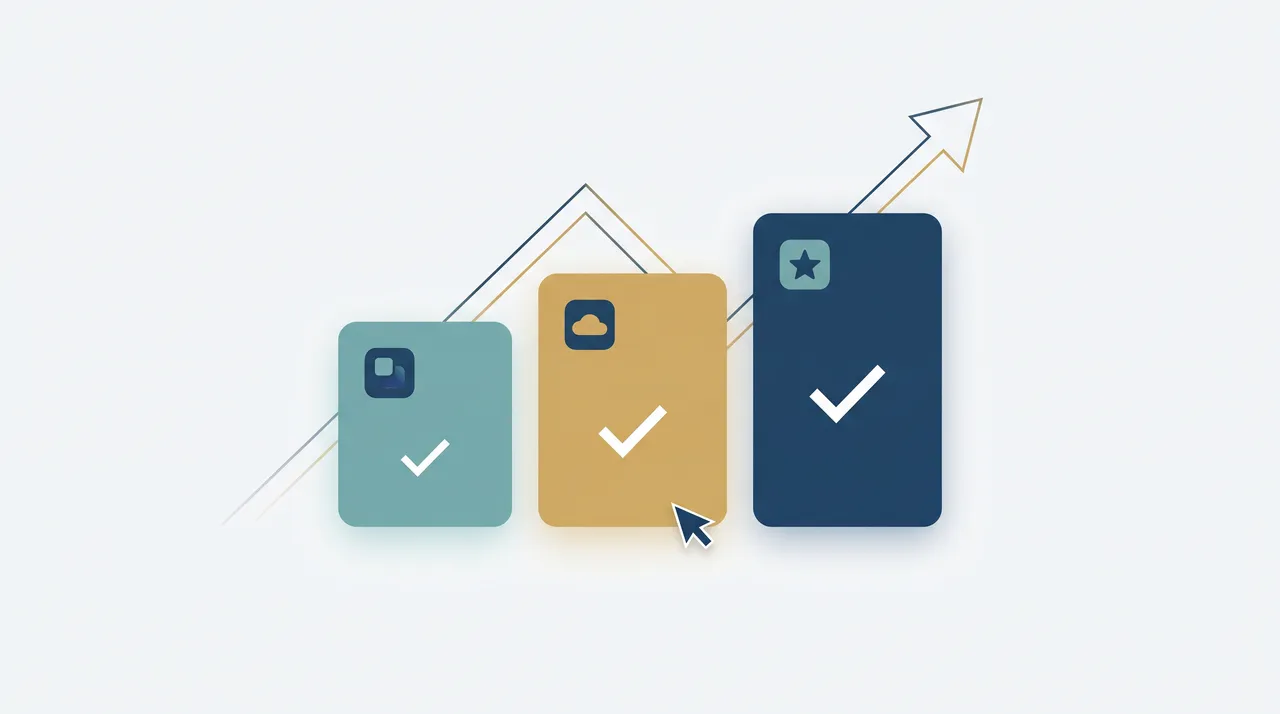
Start with the free plan if you're still testing your idea, and move to the first paid plan as soon as your app begins receiving real users. That's the short answer.codeyy platform pricingis built on a simple principle: you pay for your actual usage, not for features you won't touch. In the lines below I explain each plan in clear language, and tell you which one suits your project exactly, with numerical examples in riyals and dirhams so you can calculate your cost before you spend a single fils.
How is codeyy platform pricing built?
The basic idea is that pricing is tied to what you actually consume. Number of active apps, database size, number of monthly requests, and whether you need fast human support. The bigger your project, the more you pay in a logical and tiered manner.
This is different from the "pay everything upfront" model that some foreign tools impose. There you find yourself paying for enterprise features while you're still selling your first product.
Three pillars determine your monthly bill:
- Number of active projectspublished on the internet actually.
- Storage capacity and databasethat your app needs.
- Level of support and priorityin responses and uptime.
Before you choose, read theofficial pricing pageto see the latest figures, as fine details may change. And if you're completely new to the platform, thewhat is codeyy?article gives you quick context before you compare plans.
To understand the pricing logic more precisely, it's helpful to see prices as stacked layers, not as one line. The first layer is monthly or annual subscription fees, the second is usage limits tied to the plan, and the third is optional add-ons you buy when needed. When you separate these three layers, comparing plans becomes much clearer.
Also note that annual subscription usually offers a discount ranging from two to three free months compared to monthly payment. This discount seems small at first, but it accumulates over a full year to make a tangible difference in a startup's budget.
The free plan: who is it really for?
The free plan is for those who want to build a prototype and test it with a small circle of users before paying. You get one active project, limited storage capacity, and access to AI-powered building tools. Perfect for testing, insufficient for full commercial launch.
I see it as the smartest choice for someone with an idea who wants to see their app live within an hour, without pulling out their bank card. Try the store interface, add some products, send the link to five friends and ask for their honest feedback.
What will you miss? You won't get a custom domain in your name, and support will be through documentation and community instead of instant replies. You also have monthly request limits you might hit if hundreds of people suddenly visit your site.
Advice from experience: don't stay on the free plan for long after you prove the idea. I've seen many entrepreneurs stuck for months in "testing" when their app could have been earning real income. Free is a gateway, not a final destination.
Paid plans: where does seriousness begin?
Here the real story begins for any project that wants to grow. The first paid plan opens multiple active projects, a custom domain, greater capacity, and faster support. This is what you need the moment you make your first sale.
Let's say you run a small perfume store in Jeddah or Doha. With your first twenty orders a week, you'll need a domain in your store's name that suggests trust, not a long subdomain. That alone justifies the upgrade.
The higher plan suits those running several apps at once, or those expecting heavy traffic. Like a digital agency building apps for clients, or an entrepreneur running both a booking app and a loyalty app.
The rule I clearly recommend: choose the plan that covers you for the next three months, not the whole year. Upgrading later takes minutes, but paying extra upfront is money frozen without benefit. Start small and climb as your real numbers grow.
If you're still torn between building a website or an app, reviewthis dedicated comparison articlebefore deciding on your plan.
A common mistake is jumping straight to the highest paid plan for fear of limits. Better to start with the lowest plan that meets your current needs, then track your actual usage over the first two months before deciding to upgrade. Real data is more reliable than predictions.
- The basic paid plan:suitable for those who've exceeded free limits and need to remove the platform's branding and faster support.
- The mid-tier plan:adds extra team seats, integrations with external tools, and higher request limits.
- The professional plan:focuses on performance and support priority and advanced permission control.
What's the real cost of codeyy for a startup?
For a startup in the Gulf, calculate the first paid plan monthly, and add the annual domain cost if you buy it outside the platform. Most pay a reasonable monthly fee that's less than one design app subscription. That's your real figure, not the theoretical one.
Let's be precise with a concrete number. If you compare between hiring a freelance developer to build your store, who might charge thousands of riyals upfront, and a monthly subscription to codeyy, the difference is huge in favor of the platform in the first year.
The biggest advantage is you don't pay separate maintenance costs. Hosting, security updates, and backups are all included in your subscription. Your freelance developer will usually send you an extra invoice for every simple change.
For a deeper comparison between the two paths, check out the articleBuilding an app with AI versus hiring developers. What no one tells you: the hidden cost in hiring isn't money, it's time. Weeks of coordination and reviews versus an app ready today.
How do you choose the right plan for your project size?
Choose your plan based on three numbers you know about your project: how many monthly users do you expect? How many apps do you need to run? And do you need a domain in your name from day one? Answer these three questions, and the right plan will become clear to you immediately without confusion.
Let me simplify it with realistic scenarios. Someone testing an idea? The free plan. A small store or one booking app that's started selling? The first paid plan. An agency or entrepreneur running multiple products? The higher plan without hesitation.
Note that the common mistake is overestimating. Many buy the biggest plan "just in case" then discover they used a tenth of it. The platform is flexible, and upgrading is instant, so there's no need to pay for empty space.
On the other hand, don't skimp on a serious project. If your app is earning income, staying on free is like stalling your growth because of request limits. Link your upgrade decision to your first dinar earned, not your mood.
If you want a broader framework for choosing the platform itself, the articleArabic no-code platform: what should you look for before choosing?completes this comparison helpfully.
Are there hidden costs you should watch out for?
There are no surprise charges at codeyy, but there are items beginners miss. The custom domain you might buy from an external registrar, and some integrations with payment or messaging services have their own separate fees independent of your subscription. Know them in advance so you calculate your budget accurately.
Payment gateways are a prime example. When you connect your store to a Gulf payment gateway to process payments, the gateway takes a small percentage from each transaction. These are not codeyy fees, but fees from the payment provider itself, and they apply to any platform you choose.
Also monitor the usage limits in your plan. If you exceed the number of allowed requests, you may need to upgrade suddenly in the middle of the month. Check your consumption dashboard weekly in the first month so you know your project's real usage pattern.
Third-party services like SMS verification for authentication are billable with them. Plan for them within your operational budget, not your development budget. And to be sure about your rights and obligations, readTerms of Servicecarefully, because understanding the terms saves you from surprises later.
In addition to the above, watch out for overage fees that may be charged automatically when you exceed your usage limit without clear prior notice. Set alerts on your dashboard when you reach 80% of any limit, so you're not caught off guard by a higher bill at the end of the billing cycle.
There is also an indirect cost that is rarely calculated: your team's time. If the cheaper plan lacks integrations that force your employees to do repetitive manual work, the value of their wasted hours may exceed the price difference between the two plans.
When is an upgrade a smart decision?
Upgrade your plan when you hit an actual limit that hinders your work: your database is full, your app is slow because of heavy traffic, or you need a second project. An upgrade then is an investment, not an expense. But upgrading out of worry alone is unjustified waste.
A clear sign it's time: you start rejecting customers or features because of plan limitations. If you want to launch a loyalty program alongside your store, and your plan allows only one project, then upgrading here opens a direct path to revenue.
Monitor your app's speed as well. When customers start complaining about slowness during peak hours, the cause is usually the current plan's limits. Improving user experience is worth every additional riyal, because a frustrated customer rarely comes back.
The strategy I apply: I review my numbers every thirty days. If growth is steady and I'm approaching any limit, I upgrade before I hit the wall. Quiet, proactive upgrading is much better than a rushed upgrade during a busy sales season.
Comparing codeyy with alternatives from a value perspective
For the same price, codeyy gives you a fundamental Arabic advantage: full support for the language and right-to-left direction, plus examples tailored to the Gulf market. Many foreign tools are cheaper on the surface, but you pay later in time and effort to localize and adapt them manually.
Value is not measured by price alone. Ask yourself: how many hours will I save? And does the tool understand my customer? A platform that writes its interface in proper Arabic saves you endless reviews and increases trust from your Gulf visitors in your store.
Security is a non-negotiable item, especially if you store customer data. Review thesecurity of your apppage to understand how your data is protected, because this value doesn't show up in the price table but it's the most important thing when a problem occurs.
For a broader comparison of market tools, the articleNo-code app building tools: Arab market comparison 2026is helpful. My frank opinion: for a non-technical Arab entrepreneur, the value tilts toward a platform that speaks his language and understands his market.
When making a comparison, set your variables to be fair. Compare plans with the same number of users and roughly the same usage volume, then add the cost of add-ons required on each platform. Many platforms show a low introductory price while hiding core features behind higher plans.
In this context, codeyy's pricing stands out for its relative clarity compared to alternatives that rely on variable usage-based pricing, which is hard to predict month to month. Clarity and stability are a real advantage for projects that need a plannable budget.
Practical steps to calculate your monthly budget on codeyy
Instead of guessing, follow a simple methodology that gives you a realistic number before you pay anything. These steps help you turn codeyy's platform prices from abstract numbers into a budget tied to your specific project.
- Step one:Write a list of features your project can't work without today, and distinguish them from features you'd like but can postpone.
- Step two:Estimate your actual number of users over the next three months, not over the whole year.
- Step three:Choose the plan that covers only your essential list, and add optional add-ons on paper to see their impact.
- Step four:Multiply the monthly price by twelve, then compare it with the annual subscription price to determine which is cheaper.
- Step five:Add a 15% safety margin for any potential overages in the first three months.
This way you move from the question 'How much does the platform cost?' to a more precise question: 'How much will the platform cost me in my specific case?' This shift in framing leads you to a more mature decision and saves you from surprises.
Realistic scenarios for codeyy costs by project type
Numbers become clearer when we put them in the context of concrete examples. Below are three scenarios that represent common cases, with the logic for choosing a plan in each.
Scenario one — an individual developer building a prototype:Here you don't need any spending in the first weeks. The free plan is enough to build and test the prototype in front of an investor or potential customer. Upgrading only comes when you launch the product to the public.
Scenario two — a small store with a team of three people:This project needs multiple seats and removal of the platform branding and integration with payment tools. The mid-tier plan is usually the balanced choice, and annual subscription saves a reasonable amount over the year.
Scenario three — a growing company with high traffic:The priority here is performance, fast support, and permission controls. The professional plan is justified because any downtime or slowness translates directly into revenue loss, making the price difference an investment, not an expense.
Notice that the common rule across all three scenarios is one: pay for what you need now, and raise your level when the numbers demand it, not before.
Tips to reduce codeyy costs without sacrificing quality
Cutting costs doesn't always mean choosing the cheapest option, but using what you pay for with higher efficiency. Here are practical practices that achieve that.
- Review your consumption every three months and delete add-ons you didn't actually use.
- Consolidate seats among team members doing similar tasks instead of buying a seat for each person by default.
- Take advantage of seasonal offers or annual subscription discounts if your project is stable.
- Monitor usage limits and optimize your technical settings to reduce unnecessary requests.
- Start small and expand gradually instead of committing to a big plan from day one.
These simple habits may save you a tangible percentage of your annual bill without you feeling any shortage in performance or features.
Frequently asked questions
Is the free plan on codeyy enough to launch a real e-commerce store?
The free plan is enough to build and test your store with a limited number of visitors, but it's not suitable for serious commercial launch. You'll need a custom domain in your store's name, more capacity, and faster support for the first problem. As soon as you start receiving real orders and payments, move to the first paid plan immediately.
How do I calculate codeyy's actual monthly cost before subscribing?
Add up the monthly plan price, then add the annual domain cost spread across months, payment gateway fees as a percentage of your sales, and any third-party services like SMS. Check the official pricing page for the latest figures in SAR or AED, and start with the smallest plan sufficient for your next three months, then upgrade as you grow.
Can I upgrade or downgrade between plans at any time?
Yes, upgrading and downgrading are available and take minutes without losing your data or published apps. This flexibility means you're not forced to pay for a large plan upfront. Start small, monitor your consumption through the dashboard monthly, and scale up when you hit an actual limit that's blocking your project's growth.
What's the fundamental difference between codeyy and cheaper foreign tools?
The most important difference is complete Arabic support and ready-made right-to-left direction, plus examples tailored to the Gulf market. Foreign tools may seem cheaper, but you pay later with long hours spent on Arabization and adaptation. For a project targeting Arab customers, this value saves you working hours and increases your visitors' confidence in your product.
The summary in one sentence: match your plan to your project's real numbers, not your future ambitions. Start with the free plan to test, upgrade to the first paid plan at your first sale, and move higher when the limits actually cramp you. Flexibility is there, upgrading is instant, so don't pay today for growth that hasn't happened yet. For more details, browse codeyy's blog or jump straight to the pricing page and try it yourself.